Should Syria and Qatar Join the Mecca Pact?
Both Syria and Qatar have much to bring to the table with Mecca Pact membership. But including either would radically alter the alliance’s character—and raise the risk of a future conflict.

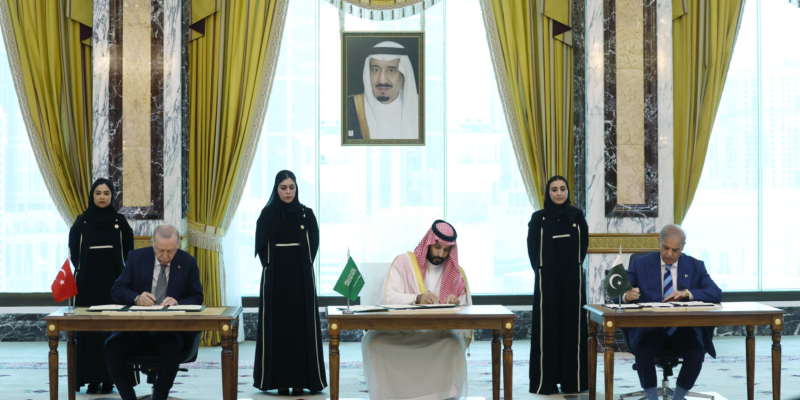
Three years of cascading conflict have fundamentally transformed the Middle East’s security outlook. American weapons, military deployments, and security guarantees remain central to the region. But Middle Eastern governments are increasingly questioning whether dependence on any single outside guarantor is sufficient in a region where wars cross borders, alliances overlap and conflict, and yesterday’s partners can quickly become today’s vulnerabilities. These changing circumstances help to explain the attention surrounding the Mecca Pact, the new defense arrangement linking Saudi Arabia, Turkey, and Pakistan. More than another security agreement, the pact reflects an emerging regional preference for overlapping layers of protection rather than exclusive alliances.
The pact’s initial signatories have made clear that they are open to expanding the alliance, much as NATO grew from a handful of Western European nations to cover the continent. Two possible, albeit very different, cases for future expansion are Syria and Qatar, both of which have good reason to seek out the concrete protection a military alliance would provide. Doha already sits at the center of one of the Middle East’s densest networks of American, Turkish, and Gulf security relationships. Damascus, by contrast, is trying to reconstruct a state whose conventional military capabilities were devastated by more than a decade of war and further weakened after the collapse of the Assad government. For Qatar, joining would therefore be primarily about redundancy and adding another layer of strategic insurance. For Syria, it would be much closer to national reconstitution.
Both nations have much they could bring to the other members of the pact. Qatar would add financial weight, energy importance, diplomatic reach, and connections to Washington. While Syria could not contribute much in the way of military capacity, at least at first, it would provide vital strategic geography in the Levant.
Membership would also impose costs on both nations. Doha would have to consider whether formal participation in another defense framework could tilt its careful geopolitical balancing act, incurring the suspicion of Iran and its regional proxies. Syria could gain badly needed deterrence against external threats, but its position on the front line of an ongoing low-intensity conflict with Israel could provide an unwelcome test of whether the pact’s collective-defense language carries meaningful consequences.
Syria’s and Qatar’s potential accession to the Mecca Pact therefore raises a larger question about what the alliance intends to become. Will it remain another flexible regional partnership, or become the foundation of a more consequential security architecture?
Qatar’s Search for Another Defense Layer
Qatar’s possible interest must first be understood within the broader reassessment of American security guarantees taking place across the Gulf. For decades, Doha had less reason than some of its neighbors to pursue aggressive strategic hedging. Its close defense relationship with Washington, combined with the American military presence at Al Udeid Air Base, provided considerable confidence in the U.S. security relationship.
In recent years, this confidence has been shaken. The regional escalation since October 7, 2023, has reinforced concerns across Gulf capitals that Washington can possess overwhelming military capabilities without necessarily being willing or able to shield its partners. Israel’s 2025 strike in Doha made that concern particularly acute for Qatar. More broadly, Washington’s difficulty in constraining Israeli military operations elsewhere in the region has raised uncomfortable questions about the limits of American influence.
Growing Israel–Turkey tensions have sharpened that concern. Israeli airstrikes on Syrian locations associated with Turkish military activity have presented Gulf governments with an unsettling question: If Washington struggles to restrain military escalation involving Turkey, a NATO member with one of the alliance’s largest militaries, what should smaller Gulf states conclude about the reliability of external protection in a crisis? The answer is not necessarily to abandon Washington, but to acquire greater agency. The Mecca Pact fits that emerging logic. For Qatar, the pact would not mean the end of its military ties with America, but would provide another regional layer encompassing intelligence cooperation, missile defense, maritime security, military training, and potentially defense-industrial collaboration.
Crucially, Doha would not be starting from scratch. Its security relationship with Turkey is already deep, while its coordination with Saudi Arabia has steadily strengthened since the end of the intra-Gulf dispute in 2021. That cooperation intensified further as the Gaza war and Iran–Israel confrontation placed growing pressure on Gulf diplomacy and regional security. And Qatar would have much to bring to the pact. It is a major global LNG supplier, a diplomatic intermediary, the host of critical U.S. military infrastructure, and a major international investor. Its membership could therefore connect the pact more directly to energy security, the Strait of Hormuz, global gas markets, and regional diplomacy. That would make Qatar an unusually valuable member.
The Mediator’s Dilemma
But it is precisely Qatar’s diplomatic value that could also make joining the alliance more complicated. The small Gulf emirate has spent more than two decades cultivating access to a wide range of actors across the Middle East, including many that distrust one another. Its mediation strategy works partly because governments and nonstate actors often regard Doha as sufficiently connected to competing camps without being completely absorbed into any one of them. Formal membership in a defense framework that includes Saudi Arabia would make that positioning more difficult, particularly if Iranian security officials begin to perceive the pact as an emerging strategic alignment directed against Tehran.
That outcome is not inevitable. Qatar would not automatically cease to be an effective mediator simply because it joined another security arrangement. States routinely maintain security alignments while sustaining diplomatic channels with adversaries; Turkey, a NATO member that maintains working ties with NATO foe Russia, is one prominent example.
Nor does the Mecca Pact necessarily appear designed to function as an anti-Iran coalition. Turkey and Pakistan, both of which have their own nuanced relations with Tehran, have strong reasons to prevent that perception from taking hold. Neither benefits from allowing the agreement to be portrayed as an emerging Sunni bloc, particularly at a moment of heightened Iranian vulnerability. Ankara and Islamabad therefore have incentives to demonstrate that deeper cooperation with Riyadh and Doha does not amount to constructing a sectarian containment architecture against Tehran.
Still, in diplomacy, perceptions can matter as much as formal intentions. Qatar would therefore have to weigh the deterrent benefits of another regional security umbrella against the possibility that Iran, its proxies, or other actors with whom Doha seeks to retain channels begin viewing it less as an intermediary and more as a member of an opposing defense coalition. The dilemma is not simply alliance versus neutrality. Qatar has never been neutral in the strict sense. It is a “major non-NATO ally” of the United States, hosts American forces, and maintains close security relations with Turkey. The more important question is whether another explicit defense commitment would change how Qatar’s adversaries perceive it.
Syria Needs Allies, and Has Much to Offer Them
Syria approaches the pact from almost the opposite direction. Where Qatar already possesses multiple security relationships and functioning military institutions, Syria’s post-Assad government has extraordinarily limited conventional capacity. Its air force and air defenses have been severely degraded, and much of its land-force equipment was destroyed during 14 years of conflict. The new administration in Damascus has a vulnerability that is far more immediate: it must rebuild military and security institutions while simultaneously consolidating political authority, no easy task in a conflict-prone region with many outside players that have a vested interest in seeing it fail.
The Syrian government has emphasized reconstruction, economic cooperation, and the restoration of regional and international partnerships, including publicly acknowledging that it is considering membership in the Mecca Pact. But continued Israeli military operations, tensions involving Hezbollah and other Iran-backed networks, and reported Iranian threats against the Syrian leadership give Damascus powerful incentives to seek partners capable of doing more than financing reconstruction.
Among its many priorities, Syria must rebuild the state’s capacity to defend itself. The Mecca Pact could potentially provide concrete defensive aid that Damascus urgently needs: military training, intelligence sharing, border-security cooperation, counterterrorism assistance, counternarcotics coordination, weapons and equipment, and eventually some form of integrated air or missile defense. Each member could contribute differently. Turkey could provide institutional experience and defense technology, Saudi Arabia political weight and financial resources, and Pakistan military expertise and additional strategic depth.
Syria’s geography makes it uniquely valuable to the other members of the Mecca Pact. A more stable Syrian state could facilitate land-based trade and infrastructure routes connecting the Gulf to Turkey and Europe, providing additional channels for commerce that are less exposed to maritime disruption in and around the Strait of Hormuz or Bab-el-Mandeb. Membership in the Mecca Pact would not by itself finance Syrian reconstruction. But the agreement could eventually function as a political-risk-reduction mechanism around which Saudi capital, Turkish capacity-building, and Qatari investment could converge if Qatar were also to join.
Syria could also become increasingly important to emerging regional infrastructure corridors. A route connecting Saudi Arabia through Jordan and Syria to Turkey would give Damascus a potentially significant role in Gulf–European connectivity. Other proposed corridors linking Pakistan and the China–Pakistan Economic Corridor with the Gulf, Iraq, and Turkey could create additional layers of economic interdependence.
In this sense, Syrian accession could evolve into something larger than military protection. It could help embed Damascus economically and institutionally within a regional order increasingly shaped by cooperation among Saudi Arabia and Turkey. That would fundamentally alter the pact itself.
Syria’s Mecca Pact Membership Has a Big Problem: Israel
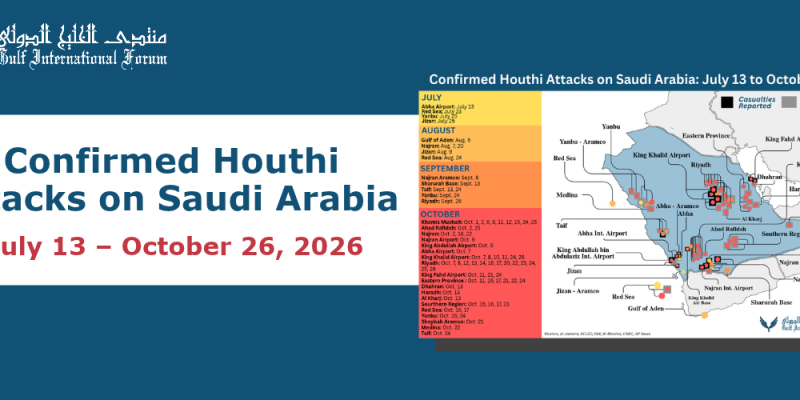
Where Qatar would broaden the Mecca Pact, Syria would test it. For Syria, joining the pact would not immediately alter the conventional military balance with Israel. Damascus cannot rebuild air defenses, military institutions, and combat capability overnight. Its more useful deterrent value would come from something less tangible: uncertainty. Israeli planners would have to consider whether a significant strike on Syria might produce some form of Turkish, Saudi, or Pakistani involvement. The Turkish and Pakistani decision to deploy forces to defend the kingdom against Houthi missile and drone attacks on Saudi airports and energy infrastructure offers a precedent for such involvement. Even without a guarantee of direct military intervention, uncertainty over how other pact members might respond could complicate an adversary’s calculations.
But ambiguity cuts both ways. If Israeli leaders cannot predict what the pact would do, that may strengthen deterrence. But if Syrian leaders cannot predict the answer either, Damascus may discover that ambiguity is not the same thing as a reliable security guarantee. This is the pact’s emerging credibility paradox. Collective-defense language is important because it raises the potential cost of attacking a member—but the stronger that promise becomes, the greater the pressure to demonstrate what it actually means when a crisis occurs. Syria’s membership could make that question immediate. Israeli forces already conduct military operations inside Syria. Syrian membership would immediately force members to decide what kind of Israeli action would cross the threshold requiring a collective response, and what that response would entail.
The possibilities span a wide spectrum. Members could coordinate diplomatic pressure, share intelligence, accelerate weapons deliveries, or even deploy defensive capabilities. Such responses could still carry strategic value, but critics might conclude that a mutual-defense pledge that stops short of meaningful military assistance is largely symbolic. The opposite scenario carries even greater risks; more substantial Turkish or Pakistani military involvement could transform a Syria-Israel confrontation into a broader interstate crisis. Syria therefore offers the Mecca Pact both an important potential military utility and its most significant entrapment risk.
Israel would also shape how far Syrian military reconstitution could proceed in practice. Even if pact members sought to rebuild Syria’s air defenses, Israel would be unlikely to acquiesce to the deployment of sophisticated radar or missile-defense systems that substantially restrict its freedom of operation over Syrian territory. A decision nominally involving Damascus and its new partners could consequently become another arena for Israel-Turkey competition. This helps explain what might otherwise appear contradictory in Syrian diplomacy.
Damascus can simultaneously explore de-escalation with Israel while considering membership in the Mecca Pact. The two approaches are not necessarily incompatible. Demonstrating a willingness to reduce tensions with Israel could reassure Israeli leaders that Syria is not joining an explicitly hostile coalition. At the same time, pursuing deeper regional security partnerships signals to Iran and other potential adversaries that Damascus is no longer strategically isolated. For a militarily weak state, ambiguity itself can become a form of leverage.
Will the Mecca Pact Have Teeth?
The Mecca Pact’s future will be defined less by how many states join than by what enlargement does to the alliance itself. Qatar could expand its diplomatic, economic, and strategic reach, while Syria could force its members to confront the risks of collective defense in an active conflict zone. An expansion in either direction would enhance the alliance’s scope and its capabilities—but could fundamentally alter its character, or force it into an early showdown that it may wish to avoid.
Still, it is clear that the pact will grow in importance in the years to come. For Saudi Arabia, the arrangement offers an opportunity to become an organizer of regional security rather than simply a consumer of external guarantees. This does not signal a break with Washington, but a broader effort to reduce dependence on any single protector. Ultimately, the pact’s credibility will not be measured by new signatures, but by how its members respond when one of them comes under attack.
The views and opinions expressed in this article are those of the authors and do not necessarily reflect the views of Gulf International Forum.
Issue: Geopolitics
Country: KSA, Qatar

Anas Alqaed is the Director of Programs at Gulf International Forum. In addition to his role, he has conducted extensive research on political and social changes in Syria, Lebanon, and Iraq, and the power and influence of paramilitary groups throughout the Middle East. Before joining the Gulf International Forum, Anas worked for the United Nations High Commissioner for Refugees (UNHCR) for 10 years in Syria IDP Operation, Iraq Refugee Operation, and Libya Refugee Operation. At UNHCR, he specialized in refugee community resilience, capacity-building for governmental and non-governmental organizations, and community mobilization. Anas holds Master’s in International Public Policy with Middle East concentration from the Johns Hopkins School of Advanced International Studies (SAIS).

Beyond Hormuz: Why Balochistan Matters to Gulf Energy Security
October 21, 2026A conflict long treated as peripheral to Gulf security is becoming harder to ignore as the war with Iran puts pressure on the region’s maritime…

China’s Technology Development Push Meets Gulf Diversification
October 6, 2026China’s “new quality productive forces” (NQPF) are often understood as a domestic effort to revive growth, upgrade industry, and reduce dependence on Western technology. Yet…

Riyadh Shifts Toward Minilateralism as Regional Threats Mount
September 9, 2026Saudi Arabia’s signing of the Mecca Joint Defense Agreement with Türkiye and Pakistan on August 7 marks a crucial development in the evolution of the…