Casting Aside the Clichés: Gulf Studies at a Global Crossroads
The second iteration of the Gulf Studies Symposium was unprecedented in size and scope—and illustrates the extent to which Gulf Studies has emerged as a mainstream discipline over the past decade.

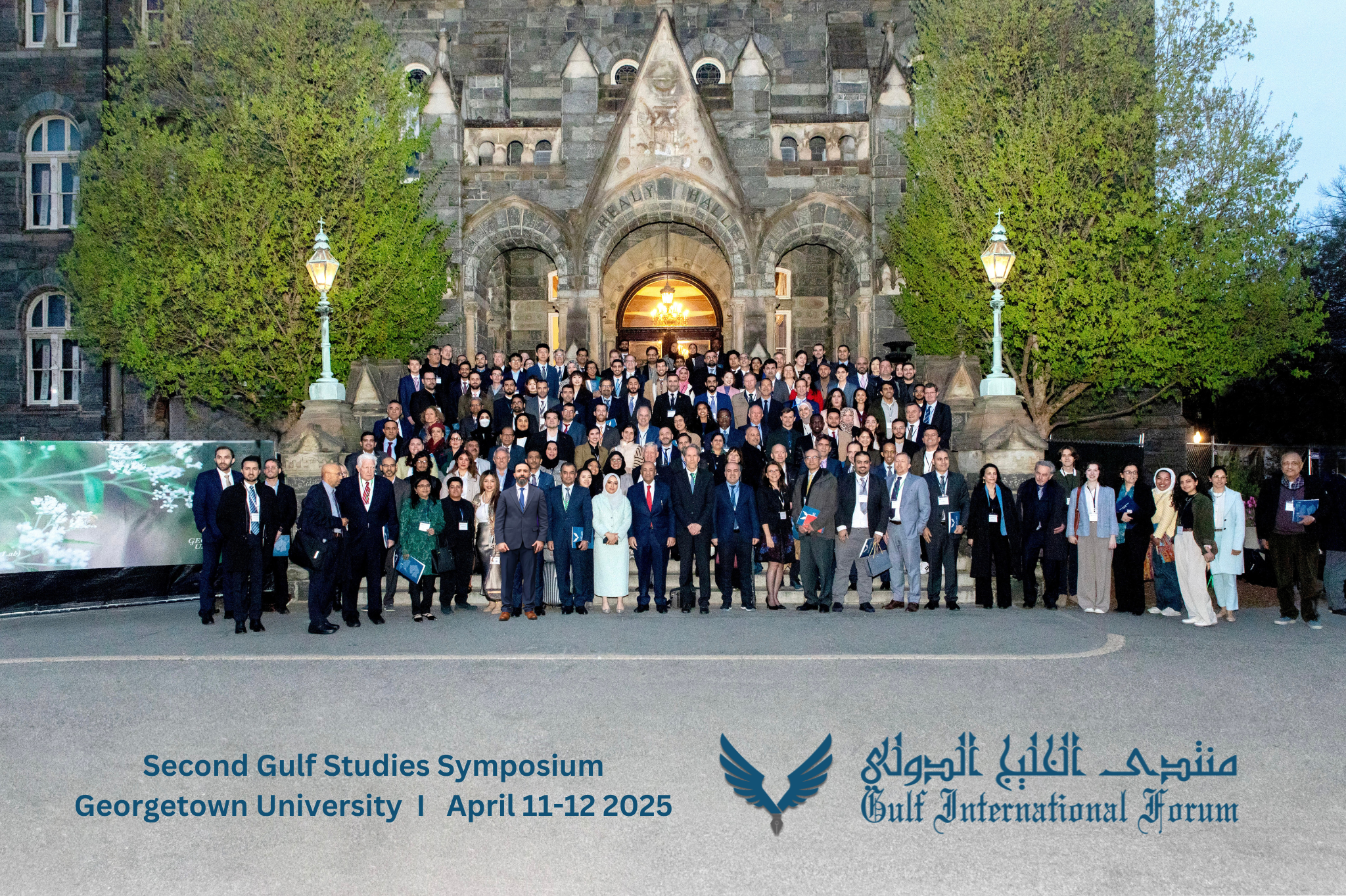
The Gulf Studies Symposium (GSS), held at Georgetown University on April 11 and 12, 2025, set a new high water mark for the practice of Gulf studies around the world. Organized by Gulf International Forum, the event brought together around 200 scholars, students, journalists, and policymakers for in-depth discussions on the Gulf region’s politics, society, and global connections. With more than a dozen workshops, the symposium’s scale and the affiliations of its participants signaled not only the field’s growth but also a shift in the geography of knowledge production about the Gulf.
The workshops’ themes—ranging from the Abraham Accords and the Gaza war to artificial intelligence, energy, and cultural achievements—demonstrated a wide range of theoretical and empirical engagement with complex and challenging subject matter. However, what distinguished the GSS from similar events held elsewhere was the conceptual centrality of the Gulf itself. The Gulf was not treated as a side note or case study, but as the center of theoretical and policy debate—a lens through which students, experts, and practitioners could consider global and disciplinary issues.
Broadening the Field
This marks a sharp departure from the traditional practice of Gulf Studies, which has traditionally been framed by rentier theory, securitization, and human rights concerns. Similarly, knowledge about the region has often been produced by foreign scholars, with research conducted on subjects from the Gulf rather than with their active participation. At the GSS, Gulf citizens and residents drove the scope and themes of the research.
Equally significant was the diversity of participants. Scholars, practitioners, and students came from across the Middle East, Europe, East and South Asia, and North America—including but not limited to China, Turkey, the United States, the United Kingdom, Pakistan, Palestine, France, the Netherlands, Qatar, and the United Arab Emirates. Though most of the event was held in person at Georgetown University, online participation was also required in some cases due to visa complications or the high cost of travel—a cogent reminder of the struggles that scholars from the Global South often face when sharing their knowledge with the world. And while the GSS brought diverse voices into the room, scholars based in the Gulf itself were still underrepresented.
Early-career researchers presented their findings alongside established academics. Some papers tested hypotheses and theories; others drew on fieldwork and policymaking experience. This diversity—of geography, method, and discipline—underscored a larger shift: Gulf Studies is no longer peripheral. In one workshop I co-chaired, a presenter was critiqued for being “too theoretical”—a moment that, paradoxically, showed just how far the field has come; the Gulf is now a site of knowledge production, not just its object.
Fostering Future Scholars
The GSS is part of a broader ecosystem of change. Alongside other Middle East studies academic conferences, these events are helping to build the intellectual infrastructure for the next generation of Gulf Studies. They offer spaces where researchers can engage with the region on its own terms. The GSS, of course, also has long-term ambitions to publish the papers and themes reviewed and discussed by workshop attendees. If even half of the presented papers are published, nearly 100 new contributions could emerge each year—an impressive output for a field still finding its institutional footing.
The symposium also recognized scholarly excellence through awards for books, journal articles, and graduate papers—another sign that the field is maturing and creating its own academic culture.
The 2025 GSS offered a window into a new intellectual tradition, in which the Gulf is not only studied, but helps shape how we study. Gulf Studies is becoming a framework in its own right—one that speaks to the complexities of a rapidly changing world and the region’s key role in it. The GSS’ unique structure and mission challenges us to rethink who produces knowledge, from where, and for whom.
The views and opinions expressed in this article are those of the authors and do not necessarily reflect the views of Gulf International Forum.
Issue:
Country: GCC

Hamdullah Baycar is a PhD candidate at the Institute of Arab and Islamic Studies at the University of Exeter. His research focuses on the identity politics of the Gulf. His academic interests also include orientalism, colonialism, and post-colonialism.
Sultan Haitham’s Visit to Türkiye: From Low Ties to Strategic Partnership
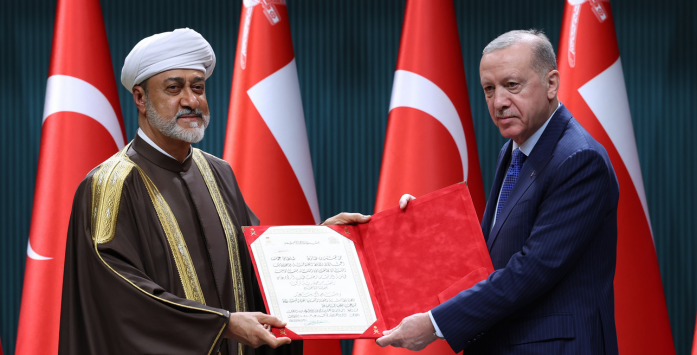
December 18, 2024Sultan Haitham bin Tarik visited Türkiye on 28-29 November 2024, marking the first-ever official visit by an Omani state leader to that country. Sultan Haitham…

How A Football Spat Nearly Derailed Saudi-Turkey Rapprochement
January 22, 2024On December 29, 2023, Turkey’s most storied football teams, Galatasaray and Fenerbahçe, planned to play the Turkish Super Cup final at Al Awwal Park at…

The Gulf in BRICS: Reshaping Geopolitical Landscapes
November 6, 2023The nature of the BRICS alliance, and the Gulf states’ interactions with it, has long been a matter of debate within the region. Gulf powers…