When Ankara and Riyadh Speak the Same Language
As regional power shifts accelerate, Türkiye and Saudi Arabia are coordinating pragmatically, managing escalation risks, and positioning themselves as pivotal middle powers shaping the Middle East’s evolving security landscape.

Ankara and Riyadh’s diplomatic approaches have increasingly converged as they began to speak the same language in regional politics: coordinated, pragmatic, and interest-driven. High-level diplomatic engagements, expanding trade relations, and parallel positions on contentious regional issues point to a growing synchronization in their policies rooted in similar political frameworks.
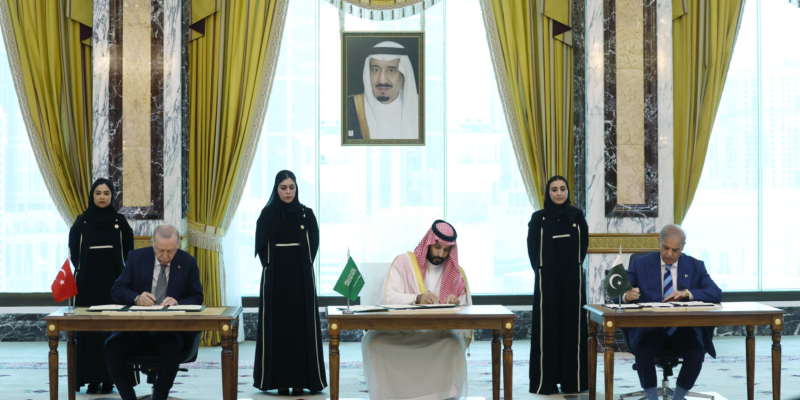
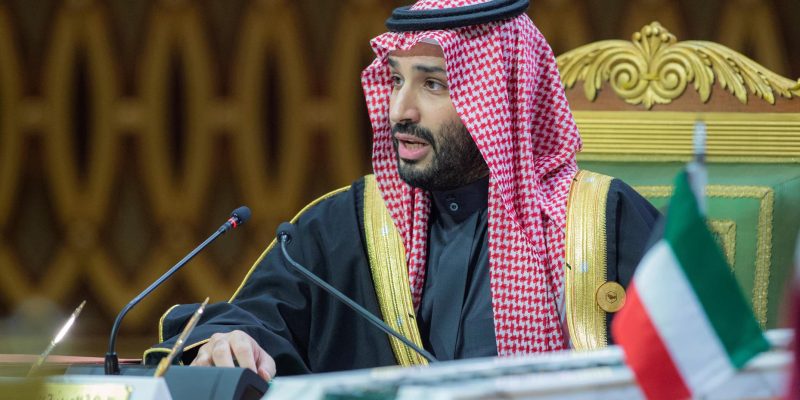
On February 3, Turkish President Recep Tayyip Erdogan visited Riyadh for talks with Crown Prince Mohammed bin Salman (MBS). In the past, the two leaders were at odds as their countries’ policies diverged on several regional and ideological issues. However, foreign policy is not static: perceptions can change, and approaches can shift in response to evolving regional and global dynamics. Turkish-Saudi relations are a clear example of this.
Drivers of Alignment
At the conclusion of Erdogan’s visit, a joint statement highlighted cooperation in energy, trade, and the defense industry – sectors Ankara has increasingly leaned on to deepen ties with regional and global partners. These areas reflect shared priorities centered on economic growth, investment, and development.
The visit also coincided with reports of trilateral talks between Ankara, Riyadh, and Islamabad about a possible defense pact, prompting speculation that Türkiye might join the Saudi–Pakistani security framework. Subsequent reports, citing a source close to the Saudi military, clarified that Türkiye would not participate in the arrangement and that the Riyadh-Islamabad defense pact would remain bilateral. Both Saudi Arabia and Türkiye remain embedded in the Western security framework – Türkiye through nearly 70 years of NATO membership and Saudi Arabia through more than 80 years of close cooperation with Washington – though both have been critical of the limits of existing security guarantees.
Given their geopolitical weight, Türkiye and Saudi Arabia do not require a formalized, super-regional security alliance. Their shared political views, expanding economic ties, closer defense industry collaboration, and well-established institutional mechanisms already constitute a de facto alliance, regardless of formal labels or acronyms.
The joint statement further highlighted this alignment. For key regional and international issues– including Gaza, Sudan, Yemen, Somalia, Syria, and Ukraine – Ankara and Riyadh stressed sovereignty, unity, and territorial integrity. These principles are more than just political rhetoric; they reflect a shared vision of a regional order built on stable, unified states rather than fragmentation and proxy conflict.
A Pragmatic Partnership
Ahead of the visit, media attention focused on rising U.S.-Iran tensions as a key element of the bilateral agenda, with Erdogan saying he would discuss the “joint efforts to de-escalate the Iran crisis.” Surprisingly, remarks on Iran were noticeably absent from the joint statement. This omission, however, does not indicate indifference or lack of coordination between Ankara and Riyadh; the Islamic Republic’s regional policy and a military escalation with Israel and the United States remain a major concern for both capitals.
Rather than public messaging, both countries have relied on quiet diplomacy, leveraging their channels with Washington to prevent escalation that could lead the region into another conflict with Iran. Given their geographical proximity to Iran and the direct risks a conflict would pose to their security, policies, and economies, both Türkiye and Saudi Arabia favor dialogue over confrontation. The two countries are well aware of the consequences given their experience from the 12-Day war between the United States, Israel, and Iran last year.
Further escalation with Iran would undermine the Turkish-Saudi vision of regional stability, particularly in Syria and Iraq. Ankara and Riyadh have coordinated closely to support stability in these countries, using political, military, and economic tools to prevent a return to chaos. Their strategy prioritizes economic and infrastructure investments to support recovery and restore regional influence, central to both countries’ long-term regional agendas.
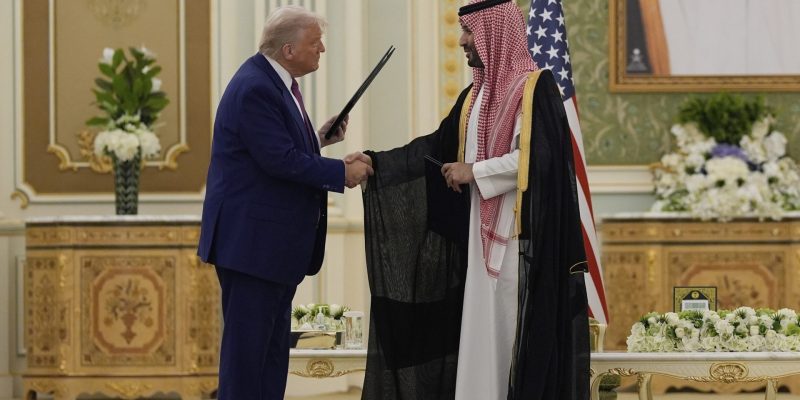
An additional, and often understated, element is the shifting regional balance. As Iran’s regional influence has diminished, Israel has increasingly emerged as a major threat to regional stability. This shared perception of Israeli threats has naturally become the driving force behind a Turkish-Saudi convergence. For the United States, the alignment presents both opportunities and challenges. It aligns with President Donald Trump’s preference for working with cooperative leaders, particularly given his close ties to both Erdogan and MBS. At the same time, a coordinated Turkish-Saudi stance could pressure Washington to adopt a firmer approach toward destabilizing Israeli actions in the region. The extent of this impact will depend on how Trump manages his relations with partners in the region.
Shaping the Regional Balance
Türkiye and Saudi Arabia are two of the strongest middle powers in the Middle East, positioned at the nexus of regional and global politics and economics. The nature of their relationship—whether rivalry or alignment—has a direct impact on the balance of power in the region. While past dynamics have not always brought these two ambitious actors onto the same page, current conditions have produced a “Turco-Saudi moment,” in which policy convergence is shaping regional outcomes. Lessons drawn from the past are now guiding the momentum both states have achieved across political, security and economic ties.
Whether this alignment deepens or remains situational will depend on how both states manage their interests in a continuously evolving regional order. However, amid a tightening security environment and the growing friendship between the two leaders, a more entrenched partnership is likely to emerge—one increasingly defined by a shared vision for regional stability.
The views and opinions expressed in this article are those of the authors and do not necessarily reflect the views of Gulf International Forum.
Issue: Geopolitics
Country: KSA

Dr. Sinem Cengiz is a researcher at Qatar University’s Gulf Studies Center and a non-resident fellow at Gulf International Forum. She is a regular columnist for Arab News newspaper and a member of the Women in Foreign Policy (DPK) Initiative. She is the author of the book Turkish-Saudi relations: Cooperation and Competition in the Middle East and co-editor of the book The Making of Contemporary Kuwait: Identity, Politics, and Its Survival Strategy. In her research, she focuses on the international relations of the Gulf and Turkey’s relations with the GCC states. Cengiz was born and raised in Kuwait and is currently based in Doha. She tweets at @SinemCngz

China’s Technology Development Push Meets Gulf Diversification
October 6, 2026China’s “new quality productive forces” (NQPF) are often understood as a domestic effort to revive growth, upgrade industry, and reduce dependence on Western technology. Yet…

Riyadh Shifts Toward Minilateralism as Regional Threats Mount
September 9, 2026Saudi Arabia’s signing of the Mecca Joint Defense Agreement with Türkiye and Pakistan on August 7 marks a crucial development in the evolution of the…

Toward a New Order in MENA Regional Geopolitics
September 2, 2026This report is a byproduct of the workshop “Toward a New Order in MENA Regional Geopolitics: What’s Next for the Region’s Geopolitical Equilibrium?,” hosted in…