Kuwait’s Climate Challenge: Why Environmental Diplomacy Matters Now More Than Ever
Kuwait’s environment is at a tipping point: extreme heat, dust, and pollution highlight the urgent need for climate action and Gulf cooperation.

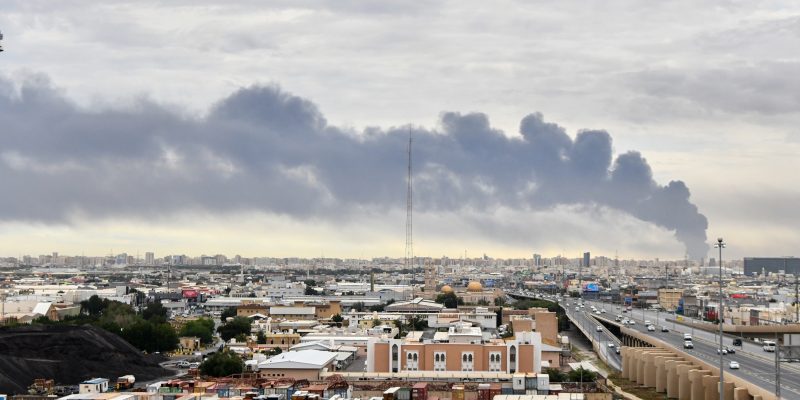
In February 1991, the day Kuwait took back its land after Iraq’s invasion, nearly 700 oil wells were burning across the desert. Iraqi armed forces had filled the wells with explosives and set them on fire in the final days of their occupation. A Time Magazine report in 2010 later ranked Kuwait’s oil fires among the worst man-made environmental catastrophes in history, behind only Chernobyl and Bhopal. Roughly 71 percent of Kuwait’s oil fields were on fire, while others were either gushing or damaged. Only 11 percent of wells remained intact. An estimated total of 1 to 1.5 billion barrels of oil were released on land and sea. Thick black smoke plumes rose thousands of feet, turning midday skies in Kuwait into pitch black.
The impact of air pollution caused by the oil fires on health is still not fully understood. At the time, monitoring capacity and satellite technology were not as advanced, limiting the ability to track pollution levels. The 1991 fires were extinguished within months, their legacy, however, persists. Nearly three decades later, Kuwait continues efforts to remove oil-contaminated soil across large swaths of the desert. In the years following the fires, Kuwaiti scientists and international researchers found that Kuwaitis who remained in the country throughout the 1990-91 occupation had a lower survival rate over the next decade compared to those who were abroad during the conflict. They also found that nearly one in four Kuwaitis present during the invasion met the clinical criteria for post-traumatic stress disorder.
As the country recovered from this major environmental disaster, new environmental threats emerged to test Kuwait’s resilience. Today, Kuwait grapples with massive dust storms, cross-border manmade pollution, and unprecedented extreme heat.
The country is now far better equipped to confront these new challenges than it was in 1991. The Kuwait Environment Public Authority (KEPA) was established in 1995 amid the massive cleanup of oil lakes. Two decades later, the Environment Protection Law was passed and strengthened further in 2015. Together, these measures granted sweeping authority to protect air, water, soil, and ecosystems, creating Kuwait’s most progressive environmental governance framework to date. Yet despite these advances, the scale and complexity of today’s climate and environmental pressures mark a new era of strain for the country.
When Nature and Industry Collide
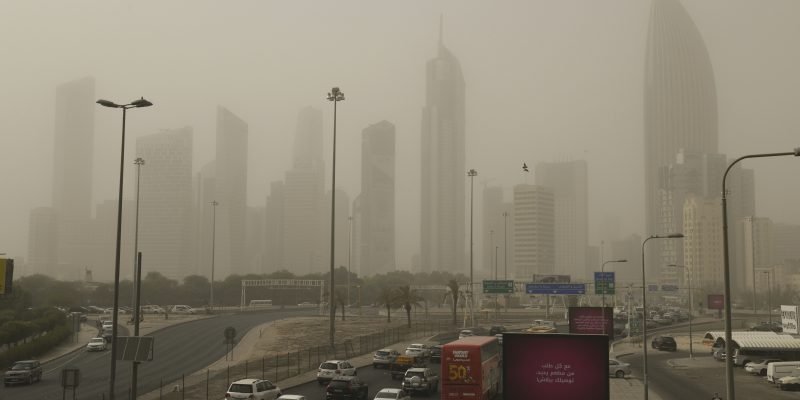
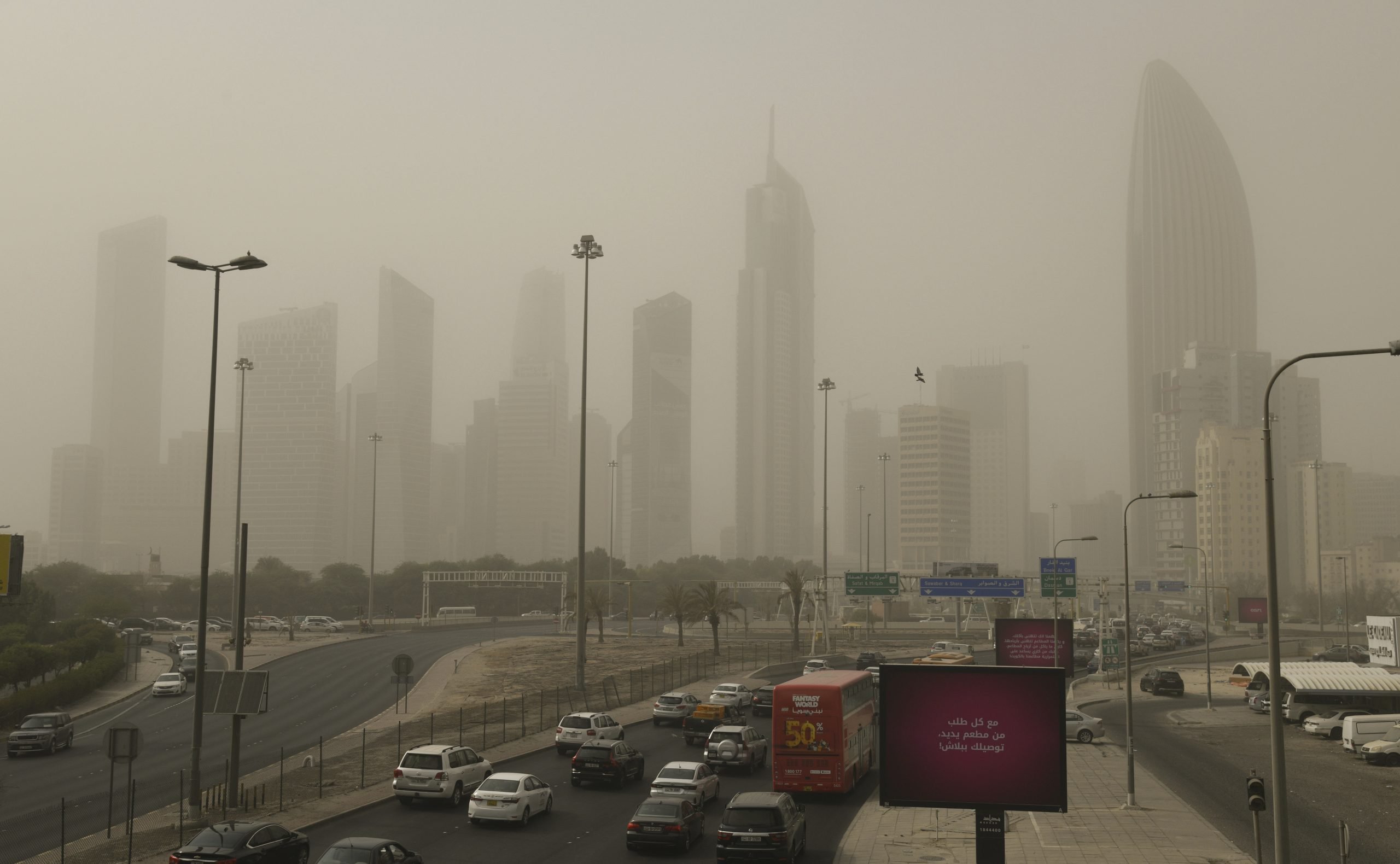
Among the most persistent environmental challenges in Kuwait are dust storms. The capital, Kuwait City, lies in the path of regional dust belts that subject it to one of the highest dust deposition rates of any city on Earth. Every year, an estimated 270 tons of dust per square kilometer settle on Kuwait City. This constant exposure to natural pollutants exacerbates respiratory illnesses and heart disease, while also damaging roads and infrastructure. The overall cost burden of dust storms is difficult to quantify, but some estimates put the average financial burden of sand and dust storms on Kuwait’s economy at $195 million a year.
Scientists from Kuwait and Iraq identified several hotspots in southern Iraq where climate-driven drought and conflict-related soil destabilization have loosened soil, allowing dust to be carried by prevailing winds and deposited over the region. An ambitious United Nations Habitat project, funded by the Kuwait Fund, is now underway to restore ecosystems in some of these desert hotspots. This initiative represents one of Kuwait’s clearest examples of leveraging international partnerships to address shared environmental risks.
Dust, however, is only one part of Kuwait’s air pollution story. In 2021, a Harvard study analyzed more than 2,000 air filters collected over two years in two sites in Kuwait, finding that only 37 to 40 percent of ambient fine particulate matter (PM2.5) was attributable to dust. The remainder came from regional fossil-fuel combustion, industrial emissions, and other local sources. Transboundary emissions from neighboring oil-producing countries such as Iraq, Iran, and Saudi Arabia were especially significant.
This highlights a foundational issue: no Gulf state can achieve clean air independently, especially geographically small countries like Kuwait. Cross-border emissions are so persistent that even if Kuwait eliminated all domestic pollution tomorrow, dust and industrial smoke from neighboring countries would continue to blanket Kuwait City.
Climate Change: The New Frontier
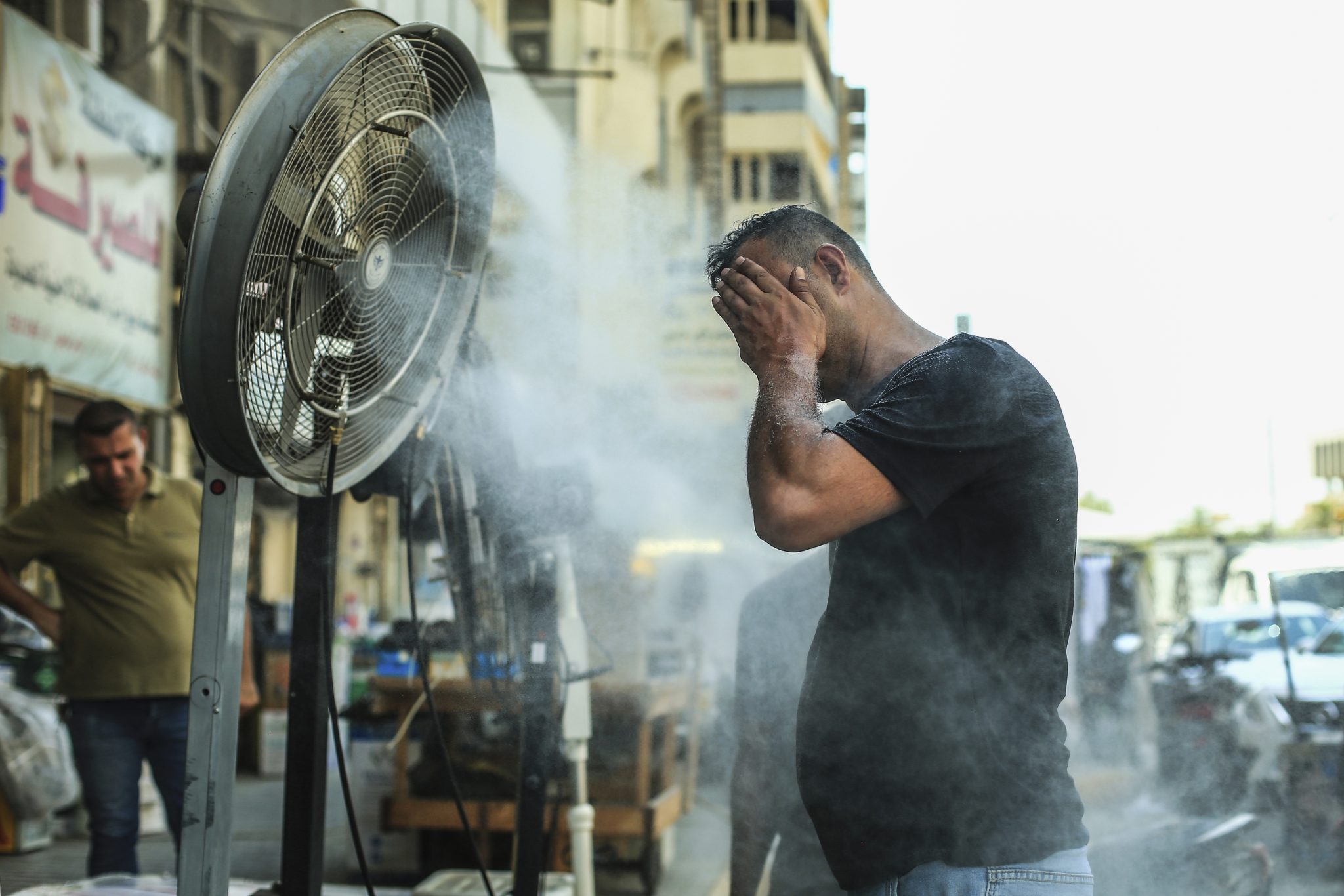
Beyond air pollution, extreme heat has emerged as Kuwait’s most urgent public health emergency. While Kuwait has long been synonymous with intense weather conditions, climate change is pushing temperatures into uncharted territory. Kuwaiti summers now regularly exceed 50°C (roughly 120°F). Recent epidemiological research shows that on days of extreme heat, the risk of dying from heart disease doubles or even triples compared to moderate days. A 10-year national study found that extreme heat and elevated dust independently and jointly increased diabetes admissions, with combined exposures producing more than 10 excess admissions on hot-and-dusty days.
Migrant workers continue to shoulder the largest burden, with studies showing they face significantly higher heat-related risks than Kuwaiti nationals. Climate projections offer little relief. Estimates suggest that, by the end of the century, Kuwait could see average temperatures 2.5 to 5.5°C (4.5 to 10°F) hotter than those experienced in the 2000s, with higher rises linked to greater greenhouse gas emissions. Health impact modeling suggests that up to 15 percent of all deaths in Kuwait could be attributable to climate-change-driven heat by 2099. Other regional studies warn that parts of the Arabian Peninsula may periodically reach heat levels that challenge human thermoregulation in the coming decades.
To prepare for these escalating climate risks, Kuwait must intensify its climate adaptation and mitigation efforts. Measures must include creating a roadmap to boost carbon neutrality ambitions, investing in cooling infrastructure and green urban design, expanding early warning systems for dust storms and heatwaves, enforcing stricter pollution controls for vehicles and industry emissions, and establishing robust protections for workers exposed to extreme heat. The health system also needs targeted help. Training for medical staff to manage climate-exacerbated conditions and research into evidence-based environmental health interventions will be critical for improving the country’s climate-readiness.
Environmental Diplomacy for a Shared Future
Kuwait cannot tackle these problems alone—regional collaboration is essential. Environmental challenges do not respect national boundaries. Neighboring countries must work together to reduce transboundary pollution.
Gulf states should collectively develop a regional dust monitoring and suppression strategy, potentially by rehabilitating Iraq’s southern marshlands and managing upstream desertification across different regions in the Arabian Peninsula. The region also needs shared health emergency response protocols for extreme weather. Environmental diplomacy may not make daily headlines, but it will be essential in a region where ecological security is both deeply interconnected and nearing an inflection point.
The views and opinions expressed in this article are those of the authors and do not necessarily reflect the views of Gulf International Forum.
Issue: Energy & Environment
Country: Kuwait
Barrak Alahmad, MD, MPH, PhD, is the Director of Occupational Health & Climate Change Program at the Department of Environmental Health at Harvard T.H. Chan School of Public Health. He holds a medical degree from the University of Liverpool, United Kingdom, a master’s in public health from the Johns Hopkins Bloomberg School of Public Health, and a doctorate in population health sciences from the Harvard T.H. Chan School of Public Health. Dr Alahmad extensively studied climate change and health in the Middle East, specifically the adverse impacts of dust storms and extreme temperatures on vulnerable populations like migrant workers. Dr Alahmad is the 2025 Public Engagement with Science Awardee from the American Association for Advancement of Science (AAAS).
Cartel at Dusk: OPEC’s Future After the Iran War
July 28, 2026Something more consequential than another oil market disruption is underway. The Iran war has exposed and accelerated an institutional weakness within OPEC that had been…
Saudi Arabia Needs an Overland Route to Global Energy Markets
July 2, 2026For years, Saudi Arabia has recognized the vulnerability created by its dependence on the Strait of Hormuz. To reduce risks from Iranian disruptions, the kingdom…
It’s Time for a Climate OPEC
June 29, 2026Many developments are converging to make climate policy an urgent priority in the Gulf, but the most recent crisis, the U.S.-Israeli war with Iran, risks…