Emirati-Turkish Economic Collaboration Could Lead to a Political One
In the short term, Turkey’s economic situation is a good incentive for Ankara to reach an agreement with Abu Dhabi, which could greatly alleviate Turkey’s economic problems; in return, a retreat from the ideological foreign policy can do much to alleviate tensions in relations between the two countries in the future.

In recent years, tensions between Turkey and the UAE have persisted over issues including the treatment of the Muslim Brotherhood, the failed 2016 military coup against Erdogan, Turkey’s presence in Africa, the 2017-2021 Gulf diplomatic crisis, the 2013 coup in Egypt, and the civil wars in Syria and Libya. In recent months, both sides have made a conscious effort to improve relations and resolve lingering tensions, and active diplomacy has been used in both Ankara and Abu Dhabi. It must be acknowledged, however, that the full recovery of relations between the two countries will not immediately repair the mistrust between the two countries over the years of mutual enmity. Tensions between the two countries have prompted the UAE to increase its ties with several Mediterranean countries and even hold a joint naval exercise with Greece, Turkey’s historic antagonist, in the summer of 2020.
The Normalization Process
During Ramadan, the Turkish and Emirati foreign ministers spoke for the first time in five years and congratulated each other on the arrival of Ramadan. Officials from the two countries then made positive comments, with former UAE Foreign Minister Anwar Gargash noting that Turkey was the UAE’s first trading partner in West Asia. Afterwards, Turkish Foreign Minister Mevlüt Çavuşoğlu said he had received positive messages from the UAE and hoped for tangible positive results. The most important sign of a change in the UAE’s attitude towards Turkey, however, came in August, when UAE National Security Adviser Sheikh Tahnoon bin Zayed Al Nahyan visited Turkey.
UAE Foreign Minister Thani bin Ahmad Al-Zaydi met with members of a Turkish business delegation on the sidelines of the Dubai Expo 2020, during which the two sides discussed various programs of important economic opportunities of interest to both countries. It was agreed to take practical steps to expand trade and investment, as well as economic cooperation between the UAE and Turkey.
Economic Cooperation a Priority
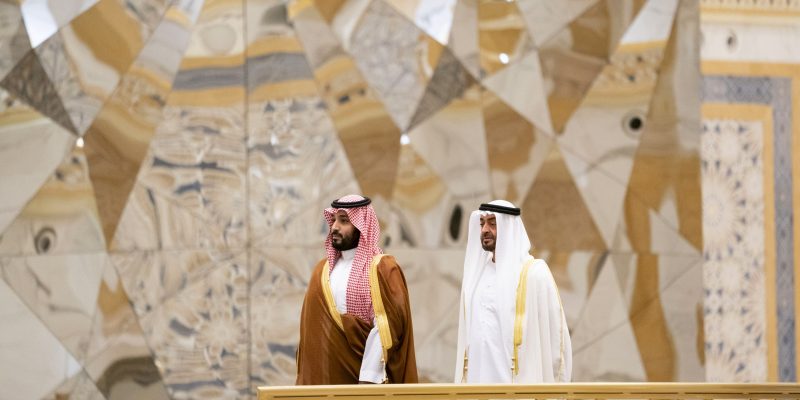
Last September, according to Al Jazeera, wealth funds in Abu Dhabi earmarked billions of dollars for investment in Turkey. Negotiations between the UAE’s oil-rich capital funds and Turkish companies have been advancing for months; they accelerated amid growing signs of a thaw and a successful telephone conversation in August between Abu Dhabi Crown Prince Mohammed bin Zayed Al Nahyan (MBZ) and Turkish President Erdogan. Investment debates provide further evidence of a shift in relations between the two countries, offering the hope that they can move beyond the issues over which they have been at loggerheads over for much of the past decade.
Although relations between Ankara and Abu Dhabi initially became strained after Erdogan accused Emiratis of supporting the 2016 Turkish coup attempt, relations between the two countries first came to a standstill after General Abdel Fattah el-Sisi’s military coup in Egypt. While the UAE emerged as the strongest supporter of the military coup, Turkey reacted harshly to this situation. Turkey also condemned the United Arab Emirates for initiating diplomatic relations with Israel in August 2020. MBZ’s visit comes after the two countries agreed to rekindle strained relations.
After relations were normalized between the UAE and Israel, Erdogan even went so far as to publicly announce that Turkey might sever diplomatic relations with the UAE. After a phone call last August, though, the two leaders discussed economic cooperation on investment opportunities in the fields of transport, health, and energy. Since then, Turkey has also taken steps to reduce tensions with the UAE. Turkey has taken similar steps to rebuild relations with Egypt and Saudi Arabia, but Turkish-Emirati talks appear to be the most successful; experts have contended that they are moving in the right direction, and the prospects for improvement are far clearer.
Turkey’s reasons for the rapprochement are economic as well as political. The country is in a serious economic depression, and in order to get out of this crisis and to stabilize the government, it needs an external source of funds. Investment and capital flow from the UAE to Turkey would go far towards rebuilding the Turkish economy and, consequently, Erdogan’s political capital. Turkey has an alliance with Qatar, but it also has a volume of almost 2 billion dollars in foreign trade. Therefore, the normalization of relations with the UAE is more likely to be rapid.
Small Steps Toward Reconciliation
Some experts believe that a political agreement between Turkey and the UAE is unlikely to be easily reached. However, a decade has now passed since the onset of the Arab Spring, and the wave of revolutions across the region has subsided. In particular, the Muslim Brotherhood, which once held power in Egypt with Turkish support, has been severely weakened, eliminating one of the most important causes of tension in Turkish-UAE relations. “Erdogan’s support for the Muslim Brotherhood is no longer important to Saudi Arabia and the UAE,” Galip Dalai, a regional affairs expert at the Robert Bush Academy in Berlin, told Reuters, “Both sides are now very keen to move down the path and envision a better future.” In a recent move that drew much attention in Riyadh and Abu Dhabi, Turkey called on Egyptian opposition groups, including the Muslim Brotherhood and other Islamist groups, to reduce their criticism of the Egyptian government. Turkey continues to block access to the websites of some UAE organizations, including Abu Dhabi’s state-run news agency, but Ankara is no longer pursuing a media policy that once drew sharp criticism of the UAE, Saudi Arabia, and Egypt.
In the pursuit of this cooperation, however, the ideological mismatch between these two governments must sooner or later be addressed. This mismatch has led to fundamentally conflicting geopolitical visions for the Middle East, which has led them to back opposing sides in nearly all regional crises, damaging relations between them. These regional powers have each become motivated to fill the gap created by the fading role and presence of the U.S. in the Middle East. Both Ankara and Abu Dhabi have similar but colliding goals in foreign policy: they have both adopted expansionist policies by which they aim to strengthen their economic, political and military presence throughout the greater Middle East. The UAE, Saudi Arabia, and Egypt have all been particularly alarmed by Turkey’s military presence in Qatar and the Horn of Africa, and the Libyan conflict has turned into a proxy war in the Turkish-Emirati rivalry.
Finally, Turkey’s goals of reconciliation fit within its larger goal of increasing its influence among Arab countries. Ankara is well aware that the United States and other major powers are also strengthening their relations within the Arab world; therefore, by changing its policies, it hopes to strengthen its position in the region. Turkish government officials are also pursuing economic goals by changing their policies toward Arab countries and moving from escalation to de-escalation. Meanwhile, Turkish government officials are trying to deescalate tension with Saudi Arabia, the United Arab Emirates, and Egypt, due to prolonged differences with the United States and Western countries. Conditions have been created for the normalization of relations between Turkey and the UAE.
Ultimately, some problems regarding differing national interests will persist between Abu Dhabi and Ankara in some regions. But in the short term, Turkey’s economic situation is a good incentive for Ankara to reach an agreement with Abu Dhabi, which could greatly alleviate Turkey’s economic problems. In return, a retreat from the ideological foreign policy can do much to alleviate tensions in relations between the two countries in the future.
The views and opinions expressed in this article are those of the authors and do not necessarily reflect the views of the Gulf International Forum.
Issue: Economy & Innovation, Geopolitics
Country: UAE

Dr. Umud Shokri is an accomplished energy strategist and senior foreign policy advisor with over two decades of experience. With a Ph.D. in International Relations, he specializes in global energy dynamics, climate change, clean energy technologies, energy security, and geopolitics. Currently a Senior Visiting Fellow at George Mason University, Dr. Shokri has significantly influenced policy and strategy development across the energy sector, including authoring “US Energy Diplomacy in the Caspian Sea Basin.” His work spans from analyzing oil and gas market trends to advising on sustainable energy policies, collaborating with government entities, academic institutions, and industry stakeholders to address global energy challenges. In his role as a Black Sea State Department Title VIII Fellow, Dr. Shokri focuses on Azerbaijan’s energy transition and preparations for COP29, exploring the country’s shift towards renewable energy and its socio-economic and geopolitical impacts. His commitment to environmental sustainability is reflected in his advocacy for aligning with ESG frameworks and guiding entities towards real-world greenhouse gas emission reductions. Through his research and engagement with policymakers, Dr. Shokri contributes valuable insights to the discourse on energy transition and climate action at both regional and global levels.
Saudi Arabia’s E-Commerce Boom: Why Traditional Small Businesses Risk Falling Behind
November 5, 2026Saudi Arabia’s digital marketplace is expanding rapidly. By the third quarter of 2026, the kingdom had 52,259 active e-commerce commercial registrations, up 25 percent from…
The Middle East’s Corridor Boom Meets Reality
July 22, 2026In recent years, particularly since the outbreak of the recent conflicts in Gaza and Iran, the Middle East has seen a resurgence of connectivity projects….
Iraq’s Fiscal Shock and the New Government’s Bargain
July 20, 2026The disruptions to shipping through the Strait of Hormuz have left Iraq facing more than an immediate export shock. Transport has remained constrained, insurance and…