Pageantry and Influence: Inside MBS’s Strategic Reset with Washington
MBS’s high-profile visit to Washington exposed a new strategic bargain driven by investment flows, defense deals, and advanced technology collaboration.

Saudi Arabia’s Crown Prince Mohammed bin Salman’s November visit to Washington unfolded with all the pageantry of a restored partnership and the substance of a relationship entering a new strategic phase. The red-carpet rollout and grand ceremony on the South Lawn, complete with a fighter-jet flyover, sent a clear message that the estrangement following the 2018 murder of Washington Post reporter Jamal Khashoggi has long faded and been overtaken by a renewed convergence of strategic and economic interests.
Tuesday’s events culminated in a lavish black-tie dinner in the East Room, attended by a high-profile roster of technology executives, financiers, and celebrities whose presence underscored the increasingly commercial and economic nature of the bilateral relationship. The next day’s U.S.–Saudi Investment Forum—billed as “a bridge between two nations redefining what partnership means”—reinforced the same message, namely that economics, technology, and capital flows now constitute the core of U.S.–Saudi ties.
From Estrangement to Engagement
This visit was not the beginning of a new chapter so much as the continuation and consolidation of dynamics that have evolved over several years. It is the product of personal rapport, family business ties developed during Trump’s first term, and a strategic alignment between Saudi Arabia’s Vision 2030 and the Trump administration’s “America First” framework—especially around the nexus of energy, technology, and investment. In that sense, the visit reflected the new lines of an ever-growing relationship that revises the oil-for-security arrangement into a framework based on mutual interests and capital deployment.
The visit marked MBS’s first return to the White House since the Jamal Khashoggi killing in 2018. Unsurprisingly, the Crown Prince arrived not as an isolated figure seeking rehabilitation, but as a leader whose reintegration into Washington’s political and business circles is largely complete. Central to this rehabilitation has been the growing influence of Saudi capital in American sectors.
The Public Investment Fund (PIF) has become a major player across U.S. finance, entertainment, sports, gaming, agriculture, energy, and technology. Its acquisitions and partnerships range from LIV Golf to AI defense start-ups, and stakes in gaming companies to lucrative arrangements with the Metropolitan Opera and women’s tennis. These investments have given Riyadh a new type of leverage in Washington, extending its capital-driven influence across industries that resonate deeply with political elites and corporate America.
MBS did not come solely as an investor; he arrived seeking inflows of U.S. capital into the kingdom. At an investment conference in Riyadh just weeks before the Washington visit, Saudi officials emphasized that the next phase of Vision 2030 would rely far more heavily on private capital. The Investment Forum was not only a showcase for Saudi money flowing into the United States, but a pitch to American investors to participate in the kingdom’s emerging manufacturing and clean-energy initiatives.
Security, Technology, and the Search for Guarantees
Despite the prominence of commercial ties, security issues were once again front and center, though U.S. and Saudi priorities diverged. Riyadh sought a publicly visible, formal security guarantee to anchor Vision 2030, deter Iran, and affirm its U.S. alignment. Washington, meanwhile, was focused on the prospect of Saudi entry into the Abraham Accords—a goal Trump touted optimistically even as internal assessments remained far more cautious.
The visit delivered substantive, though not transformative, gains for Riyadh. Within hours of the Crown Prince’s arrival, Trump agreed to a mutual defense pact, albeit one whose details remain vague and whose legal weight is far lighter than a Senate-ratified treaty.
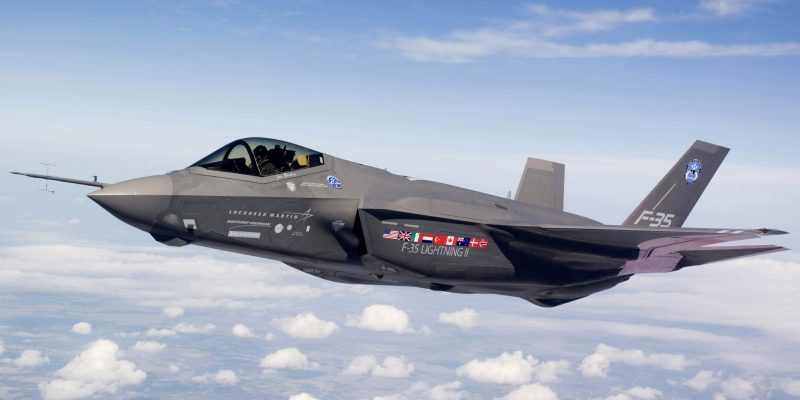
A major milestone also came at the White House dinner, where Trump formally designated Saudi Arabia a major non-NATO ally. This status could accelerate the arms-transfer review process, allow U.S. arms to be stored in the kingdom, and make Saudi Arabia eligible for Pentagon repair and maintenance contracts. It is an important step for Saudi Arabia, likely to the detriment of Riyadh’s rivals in the region. Moreover, it provides a legal and political framework for easing access to the F-35s Trump pledged to sell. The agreement package also includes a deal for nearly 300 Abrams tanks, a long-term commitment that would deepen the U.S.–Saudi defense ecosystem.
It didn’t stop there, as Washington and Riyadh signed a Joint Declaration on the Completion of Negotiations on Civil Nuclear Energy Cooperation. The two countries also forged a strategic framework agreement to boost investment and production in critical minerals, and Riyadh pledged to boost its previously announced $600 billion U.S. investment package to $1 trillion. Elon Musk’s xAI agreed to partner with Saudi’s AI Firm Humain to build a new data center in the kingdom. Humain also stands to benefit as the mechanics for U.S. approval of the sale of advanced semiconductor chips to Saudi Arabia are being worked out.
On the security front, rather than forming one sweeping “grand bargain,” both governments have settled for a modular architecture, with components on security, arms transfers, basing access, training, and technology cooperation being in advanced stages.
Perhaps the most important—and least tangible—gain for Riyadh was symbolic. The pageantry of the visit, Trump’s personal defense of MBS, and the transactional tone of discussions underscored a shift in U.S. foreign-policy priorities. Washington’s approach, at least under Trump, has moved decisively away from values-based diplomacy and toward a strategic-commercial model in which Saudi Arabia is indispensable. That shift itself is a major win for MBS and increases his ability to sway U.S. policy in directions favorable to Saudi’s Vision 2030.
Constraints, Unmet Ambitions, and the Emerging Strategic Order
Despite multiple achievements, several of Riyadh’s most ambitious goals remain beyond immediate reach. Even with Trump’s willingness to green-light the F-35 sale, the obstacles are substantial. Technology-transfer restrictions, intelligence-community concerns over Chinese access, congressional scrutiny, and Israeli objections will almost certainly result in a phased and conditioned package—if one materializes at all. Congress retains authority to block arms sales, and bipartisan skepticism of Riyadh makes such a challenge plausible.
Amid these phased and constrained arms transfers, the practical value of hundreds of Abrams tanks and dozens of promised F-35s is open to question. While symbolically significant, these acquisitions may perpetuate the “old bargain” of heavy conventional arms transfers and divert resources from Saudi Arabia’s broader modernization agenda. By emphasizing legacy platforms, Riyadh risks reinforcing a capital-intensive approach to security at the expense of investments in AI, advanced manufacturing, and other high-tech sectors critical to Vision 2030.
Whether the $1 trillion Saudi investment commitment materializes is also uncertain. Past pledges have gone unfulfilled, and analysts note that U.S. exports to Saudi Arabia during Trump’s first term totaled only around $92 billion, far short of the $450 billion in investments Trump boasted of at the time. A Senate-ratified mutual defense treaty is even less likely. The political landscape in Washington is too polarized for such an agreement to pass. Executive-level pledges offer meaningful reassurance but lack durability across administrations.
Riyadh also did not—and is unlikely to—secure unrestricted access to advanced chips or sensitive nuclear technology. Export-control regimes, congressional oversight, and intelligence-community warnings regarding Chinese influence ensure cooperation will remain heavily regulated. President Trump characterized nuclear cooperation as “not urgent,” leaving both prospects and particulars uncertain.
Normalization with Israel remains distant. The war on Gaza, Israeli domestic politics, and Saudi public resentment towards Israel make progress unlikely in the near term. The Saudi requirement of a “clear path” toward Palestinian statehood before joining the Abraham Accords remains unmet. Even as MBS’s visit concluded, Israel was carrying out airstrikes in Gaza, undermining an already fragile ceasefire.
Nevertheless, the visit clarifies the strategic direction of U.S.–Saudi relations. The emerging framework is explicitly transactional, linking capital to access, security to technology, and diplomatic influence to political recognition. While promising, it creates political risks and heightens regional tensions. Iran is likely to view deeper U.S.–Saudi security ties as threatening, and Israel will need to recalibrate its strategic expectations as Washington appears less focused on maintaining Israel’s qualitative military edge and less susceptible to Israeli lobbying. Saudi Arabia, meanwhile, is likely to continue hedging—deepening ties with Washington while maintaining technological and industrial links with China, South Korea, and others. This reflects both ambition and prudence.
A Strategic Shift, Not a Grand Bargain
MBS’s visit to Washington was not about clinching a singular breakthrough. It was about sequencing. Riyadh sought to lock in executive-level security assurances, advance technology partnerships critical to Vision 2030, deepen economic interdependence through the PIF, and keep the prospects for normalization with Israel alive while conditioning progress on Palestinian statehood.
MBS leaves Washington with substantive momentum: political rehabilitation, enhanced security ties, and strengthened pathways to technology acquisition. What he does not yet have are the hardest concessions—a treaty guarantee, unrestricted access to advanced technologies, or policy changes that advance Saudi-Israeli normalization. The trajectory of the relationship—transactional, strategic, and anchored in capital and technology—has rarely been clearer, and Saudi Arabia stands to gain from the newfound parameters of U.S.-Saudi ties.
The views and opinions expressed in this article are those of the authors and do not necessarily reflect the views of Gulf International Forum.
Issue: U.S. – Gulf Policy
Country: KSA

Dr. John Calabrese teaches international relations at American University in Washington, DC. He is the book review editor of The Middle East Journal and a Non-Resident Senior Fellow at the Middle East Institute (MEI). He previously served as director of MEI’s Middle East-Asia Project (MAP). Follow him on X: @Dr_J_Calabrese and at LinkedIn: https://www.linkedin.com/in/john-calabrese-755274a/.

The Midterms Might Change Washington’s Gulf Debate, But Not the Relationship
October 27, 2026The ongoing U.S.–Iran war comes at a pivotal moment for U.S. foreign policy. With the increasingly unpopular and drawn-out conflict taking place amid the campaign…

Saudi Arabia’s F-35 Deal Is Taking Shape
October 16, 2026Less than a year after U.S. President Donald Trump publicly backed the sale of F-35 fighter jets to Saudi Arabia, the kingdom’s long-running effort to…

Trump’s War on Iran Runs Through Baghdad
October 8, 2026Seven months into the war with Iran, the Strait of Hormuz remains a major point of contention. Goldman Sachs estimates that Gulf oil flows have…